
Fairfax County Criminal Court Cases
Fairfax County uses the General District Court for misdemeanor trials, traffic matters, and preliminary hearings in felony cases. The Circuit Court of the 19th Judicial Circuit tries felonies after indictment and hears misdemeanor or traffic appeals. Those roles explain why one Fairfax criminal case can have entries in both courts. A GDC result may show that a felony was certified, while the later plea, trial, and sentence appear under a different Circuit Court case number.
The General District Court Criminal Division is in Suite 210 at 4110 Chain Bridge Road. Its regular Fairfax County criminal docket begins at 9:30 a.m. on weekdays. Bond reduction matters are listed at 8:30 a.m., and felony preliminary hearings are scheduled Monday through Wednesday at 2 p.m. The Circuit Criminal Division is in Suite 409 at the same complex. Circuit criminal court convenes Monday through Thursday at 10 a.m.; criminal motions are heard Friday at 9 and 10 a.m. Court calendars can change, so the current court schedule should control.
The official Fairfax GDC page shows how the local divisions and dockets are organized.
The Fairfax County General District Court source supplied this view of the court’s public schedule and contacts.
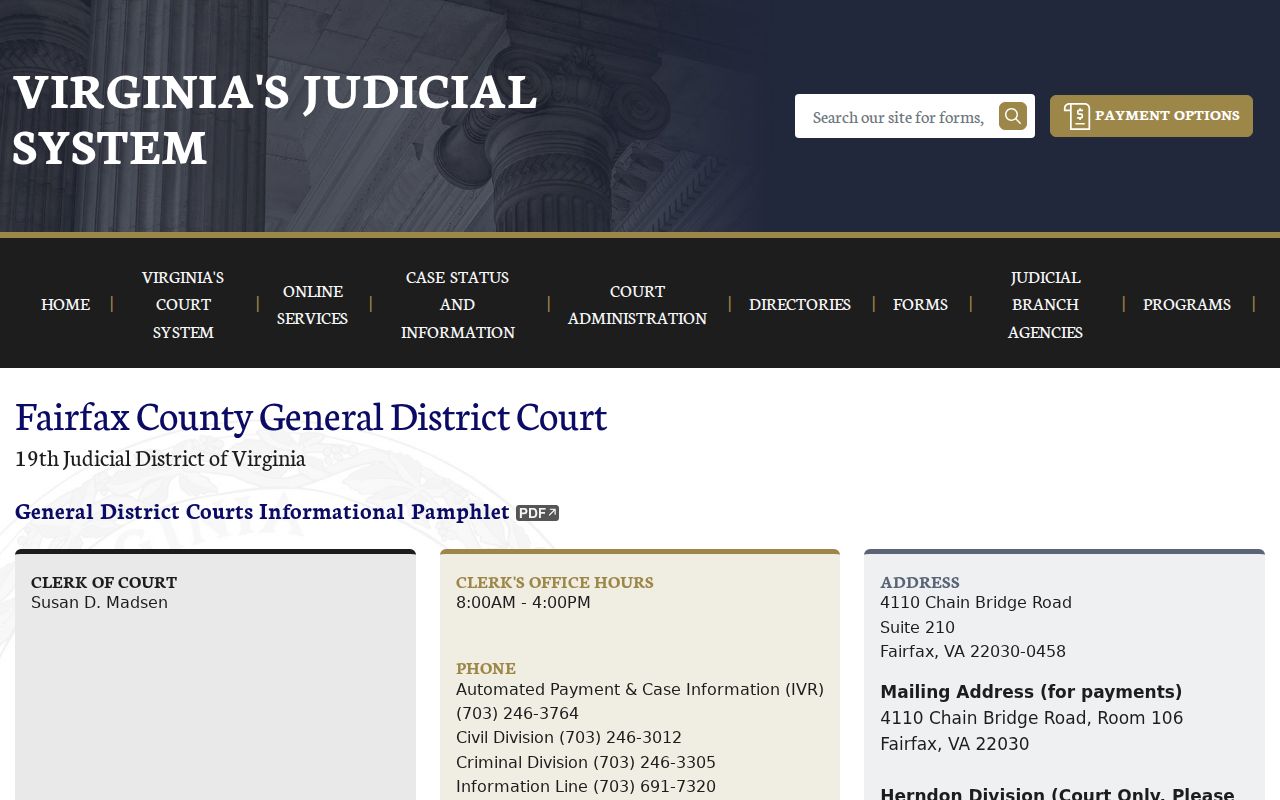
It helps a searcher confirm the proper Fairfax court before opening a name or case-number search.
Fairfax Criminal Court Portals Compared
The Virginia Judiciary case-information hub is the broad starting point for Fairfax County criminal court records. It routes readers to General District Court criminal and traffic searches and to participating Circuit Court systems. Fairfax Circuit Court also provides eCaseSearch for felony matters and appealed misdemeanor or traffic cases. Both are public indexes. Neither guarantees a downloadable image of every pleading, order, or exhibit.
Use the court named on the summons or other paper when it is known. If it is not, start with a statewide name search, then confirm the locality. Fairfax County, the independent City of Fairfax, and Falls Church are separate choices. Vienna and Herndon town sessions remain part of the Fairfax GDC structure. Selecting the wrong locality is one of the most common reasons a valid Fairfax criminal case seems to be missing.
The official statewide hub groups the available court searches in one place.
This image comes from the Virginia Judiciary online services hub.
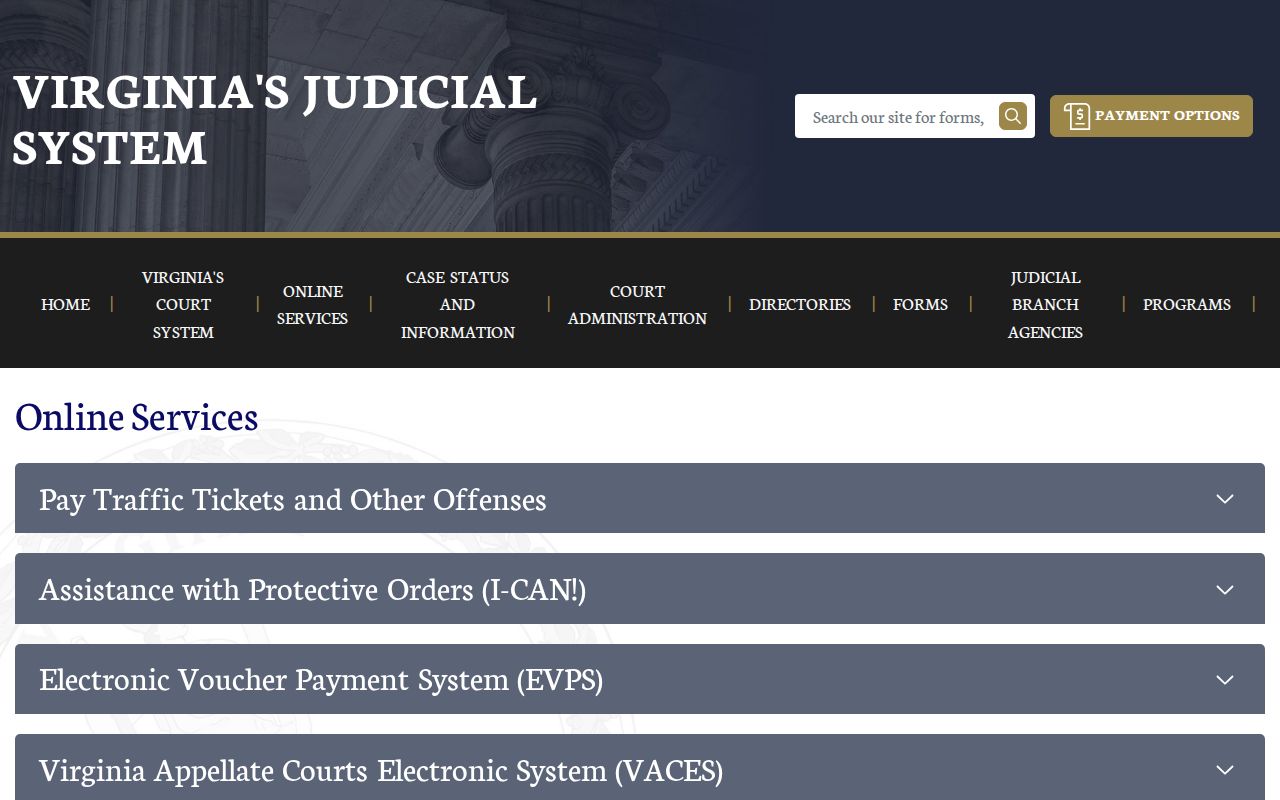
The hub is a route to court indexes, while the clerk remains the source for the full Fairfax County case file.
Searching Fairfax County Case Records
A focused Fairfax County case search begins with the right court and the strongest known identifier. An exact case number is best. A full name can work, but the reader should compare charge, hearing date, and court rather than relying on a name alone. The public system may use a CAPTCHA and linked blue case numbers to open details.
- Open the Virginia Judiciary case-information hub and choose Fairfax County General District Court or the participating Circuit Court search.
- Select Traffic/Criminal, then choose a name, case-number, or hearing-date search.
- Enter the most exact data available and complete any security prompt.
- Open the case number and compare the charge, code section, dates, status, plea, and disposition.
- Ask the Fairfax clerk for the signed order or complete file when the public index does not settle the question.
| Field Label | Type | Required | Format or Use |
|---|---|---|---|
| Court | Dropdown | Yes | Select Fairfax County GDC or the participating Circuit Court |
| Division or tab | Tabs | Yes | Choose Traffic/Criminal |
| Search type | Tab or radio | Yes | Name, case number, hearing date, or statewide search |
| Last, first, middle name | Text | Varies | Last name starts the name route; other names narrow it |
| Case number | Text | For case route | Use the exact court number |
| Hearing date | Date | For date route | Returns matters set for that date |
| CAPTCHA or security | Challenge | When shown | Follow the on-screen prompt |
Note: A public docket entry is an index, not a fingerprint-matched statewide criminal-history record or a substitute for the signed order.
Fairfax Criminal Files in Suite 409
The Circuit Court Criminal Division is the Fairfax County custodian for its felony and appealed case files. Public counter hours are 9 a.m. to 4 p.m. on weekdays. The office is at 4110 Chain Bridge Road, Suite 409, Fairfax, VA 22030, and its phone is 703-691-7320, prompts 3 then 2. A reader can inspect available files, ask for ordinary copies, or order certification. This clerk channel matters when the online docket lists an event but provides no image.
Fairfax County charges $0.50 per copied page and adds $2 for certification. A triple seal adds $2.50 per document where that service applies. Staff can copy up to ten pages during a visit; larger in-person requests are normally ready the next business day. Online requests receive a response within two business days and require prepayment. A mail request should name the case number and year, identify the parties, include the proper certified payment, and supply a self-addressed stamped envelope.
The clerk publishes the current file-review and copy guidance online.
The Fairfax Circuit Criminal Division page is the source for this counter and copy process.
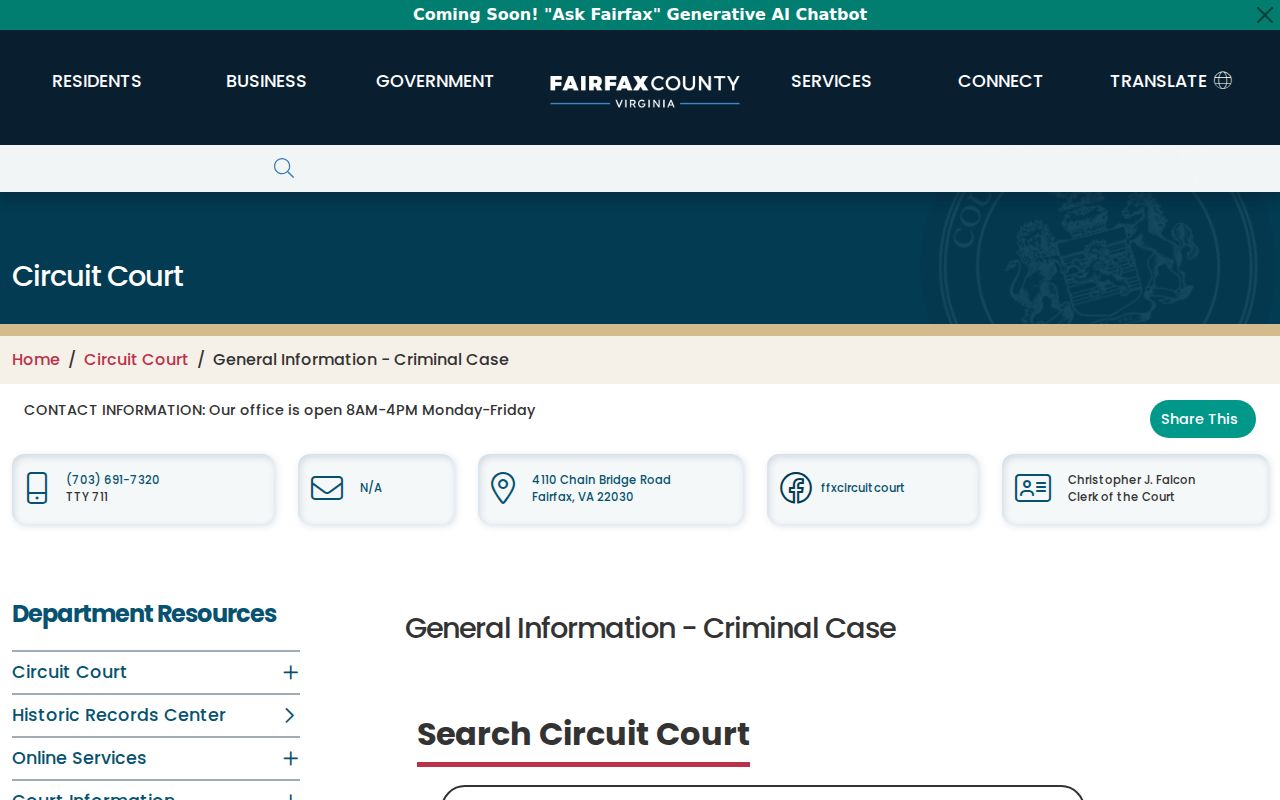
The pictured guidance links a Fairfax criminal docket search to the actual record held by the clerk.
Inside a Fairfax County Case File
A Fairfax County criminal case file records what the court received and decided. It can show the filed charge, later amendment, hearing sequence, plea, disposition, sentence, and costs. That is different from the arresting agency’s probable-cause report or the Sheriff’s booking record. Readers tracing an outcome should prioritize the final signed judgment or disposition order.
| Court and case number | Identifies the Fairfax court, matter, and court-specific tracking number. |
|---|---|
| Charge and code section | Shows the filed offense and any original or amended charge displayed. |
| Dates and docket events | Lists filing, offense, hearing, courtroom, and event data where public. |
| Plea | Records the defendant’s formal response when posted. |
| Disposition | Shows whether the court convicted, dismissed, deferred, or otherwise resolved the charge. |
| Sentence and costs | Reports punishment, conditions, and eligible payment information where posted. |
Juvenile matters do not appear in the public online case search. Victim identifiers, Social Security numbers, financial or medical data, sealed material, and some active-case information can also be restricted or redacted. The public index does not offer document images for every Fairfax County criminal court record.
Fairfax Criminal Docket Terms
Short status terms can change how a Fairfax County court result should be read. A dismissal does not by itself remove an earlier arrest or ADC booking. Likewise, a specialty docket placement does not automatically seal the case. The final order and later sealing or expungement order control.
- Certified
- The felony passed from a General District Court preliminary stage toward the grand jury and Circuit Court.
- Nolle prosequi
- The prosecution declined to continue that charge at that time; the phrase does not mean the record was deleted.
- Dismissed
- The charge ended in that proceeding, though related arrest or booking records may remain.
- Deferred
- The result depends on the governing statute and later compliance rather than an immediate final conviction.
- Guilty or convicted
- The court entered an adjudication of guilt.
Anyone correcting their own history should compare the Fairfax County court order with the arrest record and the VSP CCRE record. A certified order gives the repository or other custodian the best evidence of the court’s result.
How a Criminal Case Moves
A Fairfax County misdemeanor can remain in GDC through trial. A felony normally uses GDC for arraignment and a preliminary hearing before indictment and Circuit Court proceedings. The charge can change as prosecutors review the facts and the courts enter orders. This sequence is why the most recent docket stage matters.
Case flow: Charges Filed › Arraignment › Pretrial › Plea or Trial › Disposition › Sentencing
An arrest or summons can precede these steps, and an appeal can follow them. The court file is the best source for the judicial result. For broader context about the arrest that began a case, use the county’s Fairfax County arrest lookup resources without treating the initial allegation as guilt.
Fairfax Specialty Court Records
Fairfax County operates named treatment-oriented dockets, including Recovery Court, Veterans Treatment Docket, and Mental Health Docket. The General District Court schedule lists Mental Health Docket on the first, third, and fifth Tuesdays and Veterans Treatment Docket on the second and fourth Wednesdays. The Commonwealth’s Attorney describes these as collaborative programs that connect court oversight with treatment and support.
Participation can change the path and entries in a Fairfax criminal case, but it does not erase the public court file on its own. The resulting plea, dismissal, conviction, or other disposition still appears under the normal access and sealing rules. A reader should look for the signed order rather than infer the outcome from the program name.
Fairfax County publishes an official description of these local dockets.
This image was captured from the Fairfax Commonwealth’s Attorney specialty-dockets page.
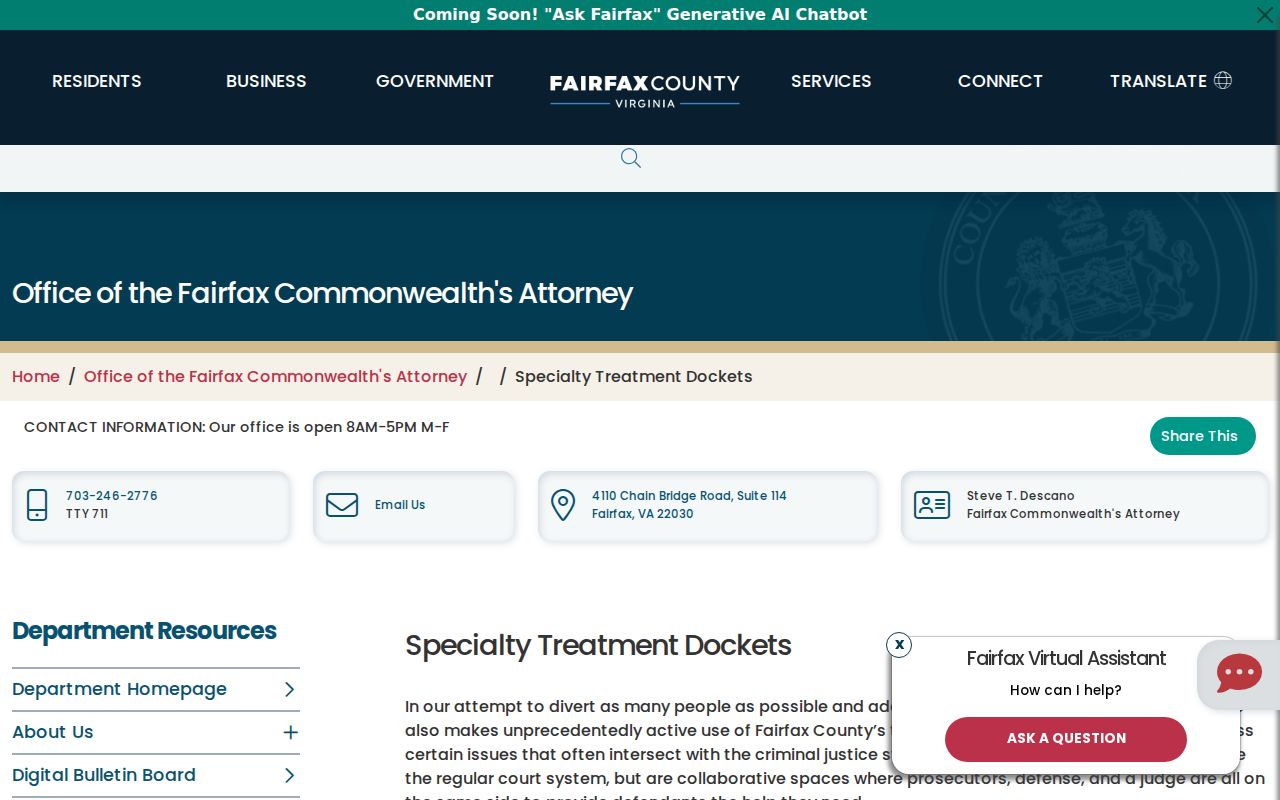
The program descriptions help explain unusual Fairfax docket events without changing the meaning of the final court order.
Case Record Access & Restrictions
Virginia treats many court records as open, but the online index is not the full universe of Fairfax County criminal files. Juvenile delinquency matters are confidential and absent from public online case search. Sealed cases, victim details, private identifiers, and protected medical or financial facts may also be withheld. A missing result can reflect the wrong court or locality, a processing delay, archival storage, or a lawful restriction.
The Virginia Freedom of Information Act governs many agency records, but it does not replace the court clerk’s case-access rules. The CCRE dissemination statute also controls access to fingerprint-based state criminal history. Ask the Circuit or GDC clerk for the court record, not FCPD or the Sheriff, when the goal is a plea, disposition, judgment, or sentence.
Visitors to the Judicial Complex pass courthouse screening. The Sheriff reports responsibility for security across 35 judges and 42 courtrooms.
The Fairfax Sheriff courthouse-security page supplied this view of entry procedures.
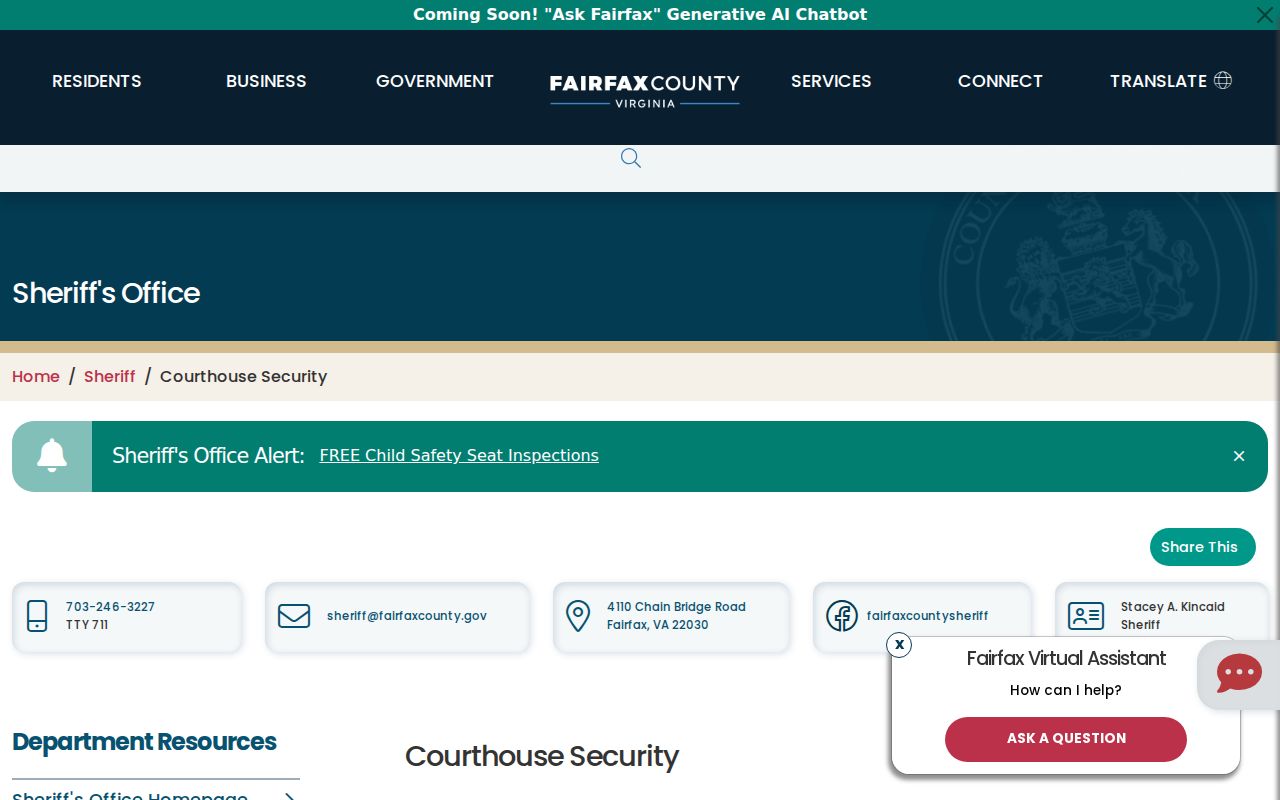
The security guidance is practical context for anyone who must inspect a Fairfax criminal case file at the courthouse.
Older Fairfax Criminal Case Files
Some older Fairfax County criminal court files are stored away from the courthouse at the Offsite Records Center, 2730 Prosperity Avenue, Suite 100, Merrifield, VA 22031. Its phone is 703-246-6656, and published weekday hours are 8 a.m. to 4 p.m. Advance notice matters, especially for files dated from 2000 through 2004 that are part of an archival project.
Use the Circuit File Review Request before traveling. Staff normally respond within two business days. Once a retrieved file is ready, it is held for no more than ten business days after the availability notice. The clerk directs the reader to the courthouse or offsite review location, so the request confirmation should be checked closely.
The county’s request form shows how Fairfax handles this retrieval step.
This view comes from the Fairfax Circuit File Review Request.
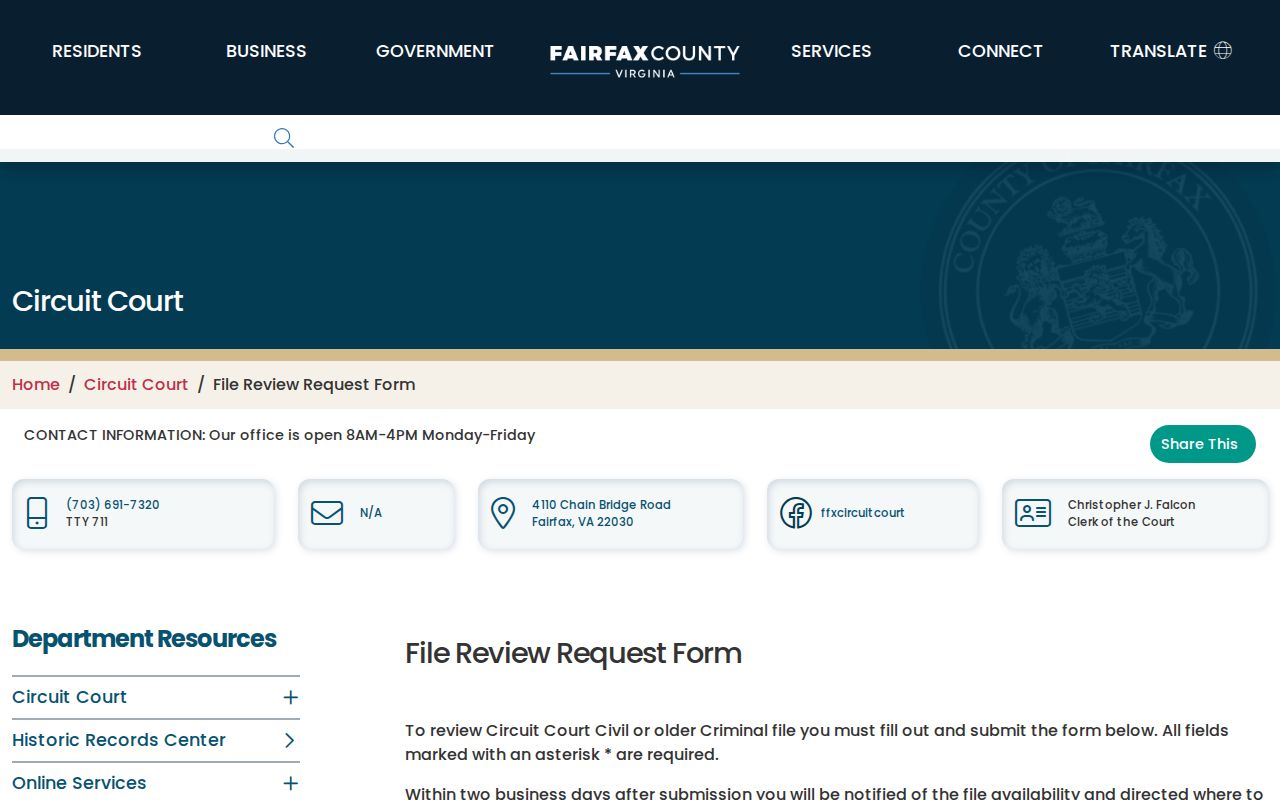
The form prevents a wasted trip when the Fairfax County criminal file must first be pulled from storage.
Note: An online case number helps the archive search, but the clerk’s availability notice determines when and where the paper file can be reviewed.